






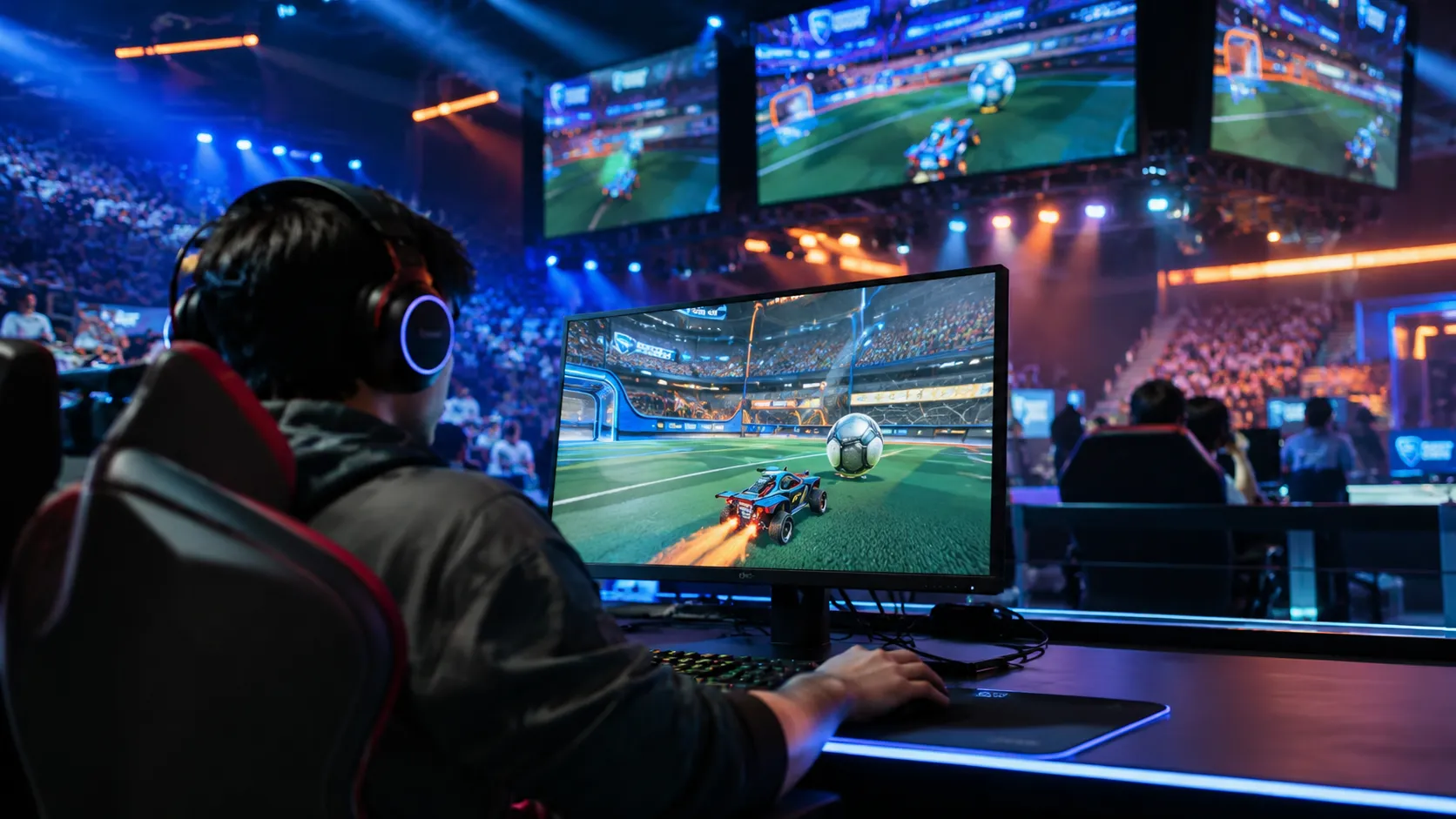
Competitive gaming has evolved from a casual hobby into a global entertainment industry, attracting professional players, major sponsors and millions of passionate fans. Among the games influencing this transformation, Rocket League stands out for its unique combination of football, high-speed vehicles and competitive strategy.
Developed by Psyonix, Rocket League has created an exciting esports environment where teamwork, precision and quick decision-making determine success. Its straightforward gameplay makes it accessible to newcomers, while advanced mechanics challenge even experienced professionals.
As esports continues to grow, Rocket League is helping redefine competitive gaming through international tournaments, streaming communities and new career opportunities.
Why Is Rocket League Becoming a Major Force in Competitive Gaming?
Rocket League offers a distinctive competitive experience by combining familiar sporting principles with advanced gaming mechanics. Unlike many traditional esports titles, its basic objective is immediately understandable: score more goals than the opposing team.
However, mastering the game requires exceptional coordination, aerial control, positioning and strategic awareness.
What Makes Rocket League Different From Other Esports Games?
The game’s accessibility is one of its biggest advantages. New players can quickly understand the rules, while professional competitors spend thousands of hours developing advanced skills.
Rocket League also delivers short, intense matches that keep viewers engaged. Spectacular aerial goals, last-second saves and dramatic overtime victories create the excitement associated with traditional sporting events.
Its free-to-play model further reduces barriers to participation, allowing more players to experience competitive gaming without purchasing the base game.
Readers interested in broader gaming developments can explore the gaming section on BrickSpace, which covers digital entertainment, gaming trends and industry insights.
How Is Rocket League Transforming Professional Esports Tournaments?
Professional tournaments have played an important role in Rocket League’s growing competitive reputation.
The Rocket League Championship Series (RLCS) provides an international competitive structure where talented teams compete for recognition, championships and substantial prize money.
According to the official RLCS 2026 season announcement, the competition featured regional open tournaments, international Majors and expanded competitive formats.
The 2026 World Championship brought together 20 teams in Fort Worth, Texas, competing for a $1.2 million prize pool. Team Falcons ultimately secured the 3v3 world title.
These events demonstrate how Rocket League can deliver professional sporting entertainment through digital competition.
How Do Rocket League Tournaments Compare With Traditional Esports?
| Feature | Rocket League’s Approach | Impact on Esports |
|---|---|---|
| Gameplay | Vehicle-based football | Easy for newcomers to follow |
| Match structure | Short, action-packed games | Engaging viewing experience |
| International events | Regional and world championships | Global competition |
| Competitive formats | 1v1, 2v2 and 3v3 | More opportunities for players |
| Accessibility | Free-to-play base game | Lower entry barriers |
| Streaming | Live broadcasts and creator content | Stronger community engagement |
The combination of these features makes Rocket League particularly suitable for competitive broadcasts and community tournaments.
How Are New Competitive Formats Creating More Opportunities?
One significant development in Rocket League esports is the expansion beyond traditional three-player teams.
The 2026 RLCS included 1v1 and 2v2 world championship competitions alongside its established 3v3 format.
Each format highlights different abilities.
In 1v1 matches, individual mechanics, decision-making and consistency become essential. Two-player competitions demand strong partnerships, while 3v3 matches emphasise coordinated teamwork and tactical rotations.
This variety gives players additional competitive pathways and allows audiences to enjoy different styles of gameplay.
For enthusiasts interested in understanding the game’s evolving competitive environment, RL Insider provides a dedicated destination for exploring Rocket League-related information and community interests.
As competitive formats continue developing, Rocket League could encourage other esports organisers to experiment with more diverse tournament structures.
How Is Rocket League Influencing the Growth of Gaming Communities?
Rocket League’s success extends beyond professional championships. Its active community plays an important role in maintaining interest and encouraging participation.
Players regularly share gameplay clips, training tutorials, competitive highlights and entertaining moments across digital platforms.
These activities help newcomers understand advanced mechanics while connecting experienced players with enthusiastic audiences.
Why Are Streaming Platforms Important for Rocket League?
Streaming services have transformed how esports fans experience competitive gaming.
Platforms such as Twitch and YouTube allow viewers to follow professional tournaments, watch educational content and interact with gaming personalities.
Rocket League benefits from this environment because its fast-paced gameplay produces exciting moments suitable for livestreams and short-form videos.
Content creators also help bridge the gap between casual gaming and professional competition by explaining tactical decisions, demonstrating techniques and analysing tournament performances.
This relationship between players, creators and audiences helps maintain community engagement beyond major events.
How Is Rocket League Creating Career Opportunities in Esports?
Professional gaming is no longer limited to competing in tournaments. Rocket League’s esports ecosystem supports a range of professional activities.
Players can develop careers as competitors, coaches, analysts, commentators and content creators.
Tournament organisers also require production specialists, event managers, graphic designers and marketing professionals.
What Skills Do Professional Rocket League Players Need?
Successful competitors require more than impressive mechanical ability. Communication, adaptability and emotional discipline are essential when performing under pressure.
Teams frequently analyse gameplay footage, study opponents and practise coordinated strategies to improve competitive performance.
These professional approaches demonstrate how esports increasingly resembles traditional sports in its emphasis on preparation, coaching and performance analysis.
The commercial opportunities surrounding esports also reflect broader technological innovation. BrickSpace explores related developments in its article on innovation and UK business growth.
For aspiring professionals, Rocket League provides opportunities to develop valuable skills while participating in a competitive digital environment.
Why Are Major Brands and Sports Organisations Interested in Rocket League?
Esports offers businesses opportunities to reach audiences through digital entertainment.
Rocket League’s football-inspired gameplay creates a natural connection with traditional sporting culture, making it attractive to organisations familiar with sports marketing.
Professional football organisations and established esports brands have participated in Rocket League competitions, demonstrating its potential to connect different audiences.
Sponsorships, branded broadcasts and live events can create commercial opportunities for tournament operators and participating organisations.
However, sustainable growth requires consistent fan engagement, reliable competition structures and commercially viable partnerships rather than prize money alone.
What Challenges Could Affect Rocket League’s Esports Future?
Despite its achievements, Rocket League faces challenges common to professional gaming.
Maintaining player interest requires regular competitive opportunities, balanced gameplay and meaningful community engagement.
Professional players must also manage demanding training schedules, performance expectations and the uncertainty associated with tournament results.
Financial sustainability is another important consideration. Tournament organisers and esports teams need dependable business models to support long-term operations.
Competitive integrity remains equally important. Clear rules, fair regional eligibility requirements and effective tournament administration help build trust among participants.
Addressing these challenges will influence whether Rocket League continues expanding its position within the esports industry.
What Does the Future Hold for Rocket League and Competitive Gaming?
Rocket League’s future could involve greater international participation, improved tournament broadcasts and more opportunities for emerging players.
New analytical tools may help competitors review performance, understand positioning and develop more effective strategies.
Broadcast innovation could also make professional matches easier for casual audiences to understand through improved statistics, camera angles and accessible commentary.
The game’s international appeal is already evident. Following the 2026 World Championship, the official Rocket League competitive website announced the first RLCS Club Championship, with its kickoff event scheduled for December 2026 at London’s Copper Box Arena.
Such developments illustrate how Rocket League continues experimenting with competitive experiences beyond its established championship structure.
Future success will depend on balancing innovation with the accessible gameplay that originally attracted its audience.
Conclusion
Rocket League is helping shape competitive gaming by combining accessible gameplay, professional tournaments and an enthusiastic international community.
Its expanding tournament formats, streaming opportunities and connections with traditional sports demonstrate how esports can reach audiences beyond conventional gaming circles.
Although challenges remain, Rocket League offers an important example of how competitive games can develop into lasting entertainment ecosystems.
As technology, broadcasting and player development continue evolving, Rocket League is well positioned to remain an influential part of the future of esports.
